Skip to content

Evidence over self-report. Observation over questionnaires.

The YTAA assessment methodology combines game-based behavioural observation, structured self-reflection and peer feedback into one competency profile.

How assessment works

  1. 01

    Pre-game diagnostics

    Multiple intelligences, life drivers and VIA character strengths; participants are assigned to one of five guilds.

  2. 02

    The simulation

    Five guilds build a city across five 25-minute quarters: trading resources, negotiating, cooperating, delivering projects to the mayor’s office.

  3. 03

    Structured debrief

    Self-assessment and peer assessment on 12 competencies; facilitators complete observation protocols.

  4. 04

    The profile

    Three perspectives combined: how you see yourself, how peers see you, what facilitators observed.

  5. 05

    The report and career map

    Competency profile, Nova-Lead indices, professional vectors and a map of future professions with matching study pathways.

The Nova-Lead model

Growth & Drive

Learning through feedback, initiative, ambition.

Leadership

Empathy, coaching, team-building, the ability to move a group.

Critical Thinking

Analysis, risk assessment, context and long-term decisions.

Ethics, Empathy & Self-Regulation

Integrity, self-control, safe dialogue under pressure.

12 competencies

  • growth through feedback
  • drive to win
  • working with feedback
  • initiative
  • empathy & active listening
  • team-building & mentoring
  • cooperation & negotiation
  • critical thinking
  • context, strategy & decisions
  • risk assessment & hypotheses
  • self-control
  • ethics & safe dialogue
YTAA participants

The perception gap

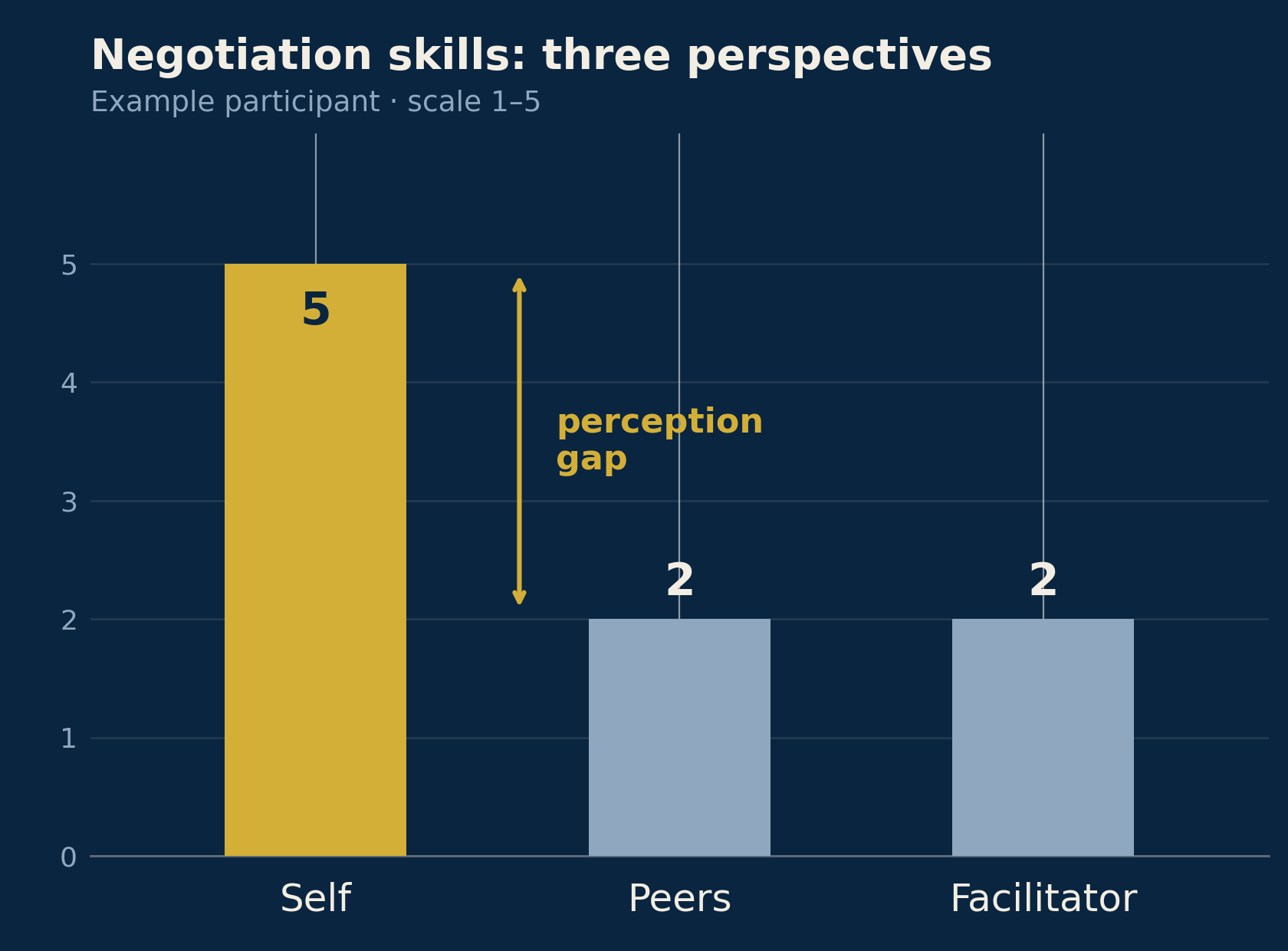
Our signature metric is the perception gap — the difference between self-assessment, peer assessment and facilitator observation. A participant who rates their negotiation skills at 5 while peers and facilitators rate them at 2 has not “failed”; they have found their most valuable development zone. This is the same gap that surfaces expensively at age 25 — in hiring mistakes and early attrition — when it could have been a development conversation at 16.

Perception gap chart: self, peer and facilitator ratings

What makes a YTAA recommendation credible

A YTAA recommendation means: this person has shown sufficient readiness for a defined next opportunity — and here is the basis for that judgment. It is not a prediction that they will succeed everywhere, nor a substitute for a university's or employer's own decision.

Methodological integrity

Methods with a clear rationale, transparent criteria and stated limits. Popular typologies may begin a conversation; they are never treated as proof on their own.

An identity-centred interpretation

We listen beyond a test result, helping the participant identify a personal professional core — rather than internalise a route suggested by a significant adult.

Observed and owned experience

A recommendation considers what the participant has actually done — in a facilitated format, project, case or mentoring conversation — and how they themselves make sense of it.

Evidence of learning and self-regulation

Not only a strength, but the participant's capacity to reflect, learn, respond to feedback and use the strength responsibly.

A defined scope

Every recommendation states the next opportunity it is relevant to, the evidence available and its limits. It never overclaims certainty.

Over time, YTAA formalises an evidence record that participants own and selectively share: experience, reflection, feedback, demonstrated competencies and next-step goals.

What participants receive

  • Individual report — game profile, competency scores from three perspectives, Nova-Lead indices, expert commentary on strengths and growth zones.
  • Personal career map — future professions ranked by fit (match score, demand trend, supporting skills), with explicit “what to develop next” guidance and matching university pathways.
  • Development track — recommended projects, cases and mentors to test and grow the profile in practice.
Download a sample report (anonymised, PDF)
Career map icon

What this is not

Not a psychological diagnosis, not an IQ test, not a guarantee of admission or employment, not a fixed label. Assessment reflects behaviour in one structured situation, at one point in time. Recommendations expand options; they never close them. Final decisions about admission always rest with universities; hiring decisions always rest with employers.

For universities